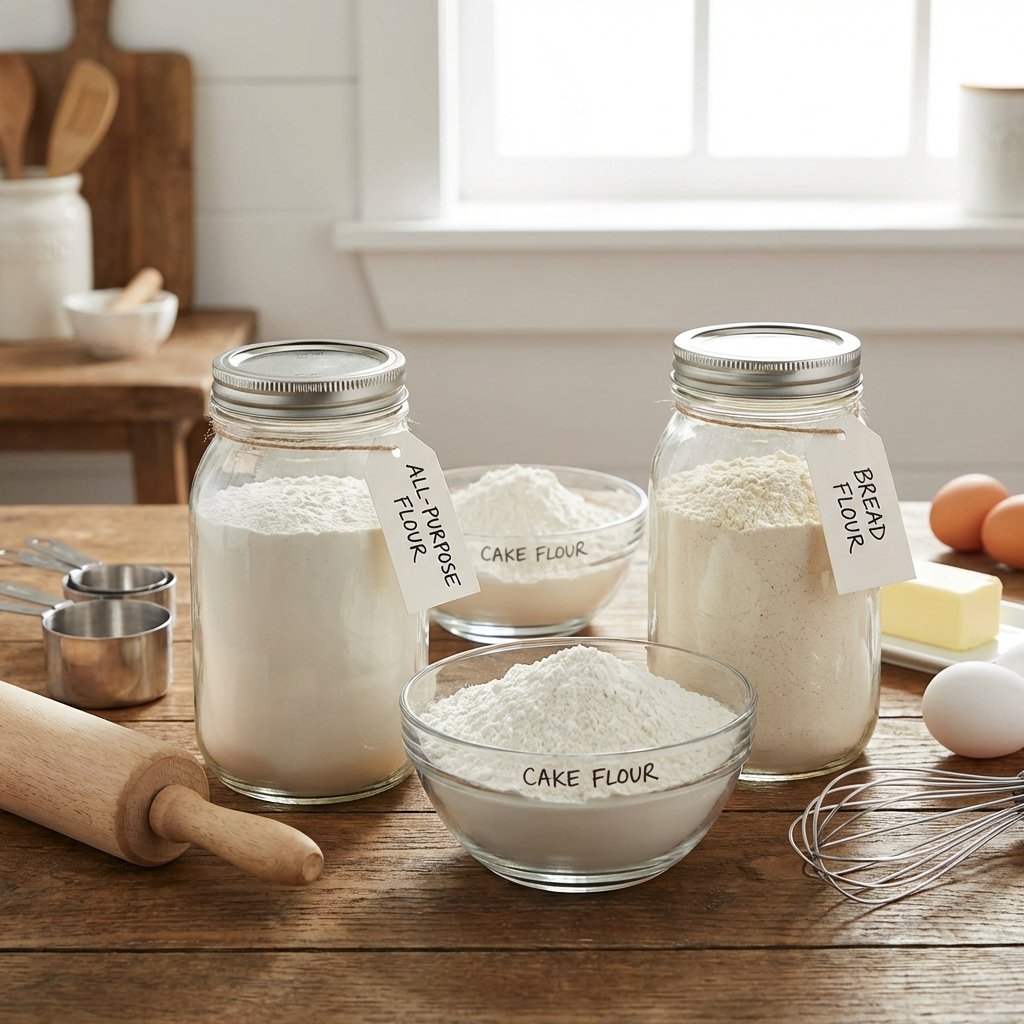
Flour Types Explained
Plain (All-Purpose) Flour - THE STANDARD
Protein content: 10-12% Best for: Most pies, everyday baking Why it works: Balanced protein creates tender yet sturdy pastry Brands in Singapore: Prima, Baker’s Choice, Gold Medal
Andy’s verdict: This is your go-to for 95% of pies!
Cake Flour - EXTRA TENDER
Protein content: 7-9% Best for: Ultra-delicate tarts, sweet pastries Why it works: Low protein = less gluten = melt-in-mouth texture When to use: When you want pastry that shatters at the touch
Tip: Replace 25% of plain flour with cake flour for extra tenderness
Strong (Bread) Flour - SKIP IT!
Protein content: 12-14% Best for: Bread, pizza dough Why NOT for pies: Too much gluten = tough, chewy pastry Andy’s warning: Never use bread flour for pie pastry!
Wholemeal Flour - NUTTY OPTION
Protein content: 13-14% Best for: Rustic pies, savory tarts Why it works: Adds nutty flavor and texture How to use: Replace 25-50% of plain flour (not all!)
Note: Absorbs more water, so add an extra 1-2 tbsp
Self-Raising Flour - AVOID
What it is: Plain flour + baking powder Why avoid: Rising agents aren’t needed in pastry Exception: Some scone-like pastries use it intentionally
Protein Content: The Key to Understanding Flour
Low protein (7-9%) = Less gluten = Tender, crumbly, delicate Medium protein (10-12%) = Balanced = Tender but holds together High protein (12-14%) = More gluten = Strong, elastic, chewy
For pastry: You want LOW TO MEDIUM protein!
Singapore Flour Brands Ranked
Best for Pie Pastry:
- Prima Flour Plain - Consistent, widely available
- Baker’s Choice Plain - Good quality, affordable
- Gold Medal Plain (imported) - Premium option
Budget Options:
- FairPrice house brand - Works fine for everyday pies (widely available at outlets in Harbourfront, Great World, and across Singapore)
- Sheng Siong house brand - Budget-friendly (check branches in Clementi, Ang Mo Kio, and neighborhood areas)
Premium/Imported:
- King Arthur All-Purpose - Excellent but expensive (found at specialty stores in Orchard)
- Bob’s Red Mill Pastry Flour - Specialty option (look for it at gourmet supermarkets near Changi Airport area)
How to Test Your Flour
The Squeeze Test:
- Grab a handful of flour
- Squeeze firmly
- Release and observe:
- Holds shape = higher protein (bread flour)
- Falls apart easily = lower protein (pastry flour)
Storage Tips
Pantry storage: 3-6 months in airtight container Refrigerator: 1 year (especially wholemeal) Freezer: 2 years
Why cool storage: Prevents rancidity, especially in whole grain flours
Andy’s hack: Label containers with purchase date!
Common Flour Mistakes
❌ Using bread flour - Results in tough pastry ❌ Measuring by volume - Inconsistent (use weight!) ❌ Old flour - Can taste stale or rancid ❌ 100% wholemeal - Too heavy for delicate pastries
✅ Use plain flour for most recipes ✅ Weigh flour for consistency ✅ Store properly to maintain freshness ✅ Mix flour types for custom results
Flour Substitutions
Don’t have plain flour?
- 75% bread flour + 25% cake flour = reasonable substitute
Want extra flaky pastry?
- 75% plain flour + 25% cake flour = ultra-tender
Adding flavor?
- 75% plain + 25% wholemeal = nutty taste
Key Takeaways
✅ Plain (all-purpose) flour is best for most pies ✅ Protein content determines pastry texture ✅ Cake flour makes extra-tender pastry ✅ Never use bread flour for pie pastry ✅ Store flour in airtight containers
The right flour makes a noticeable difference! Stick with plain flour for reliable results, experiment with cake flour for special occasions.