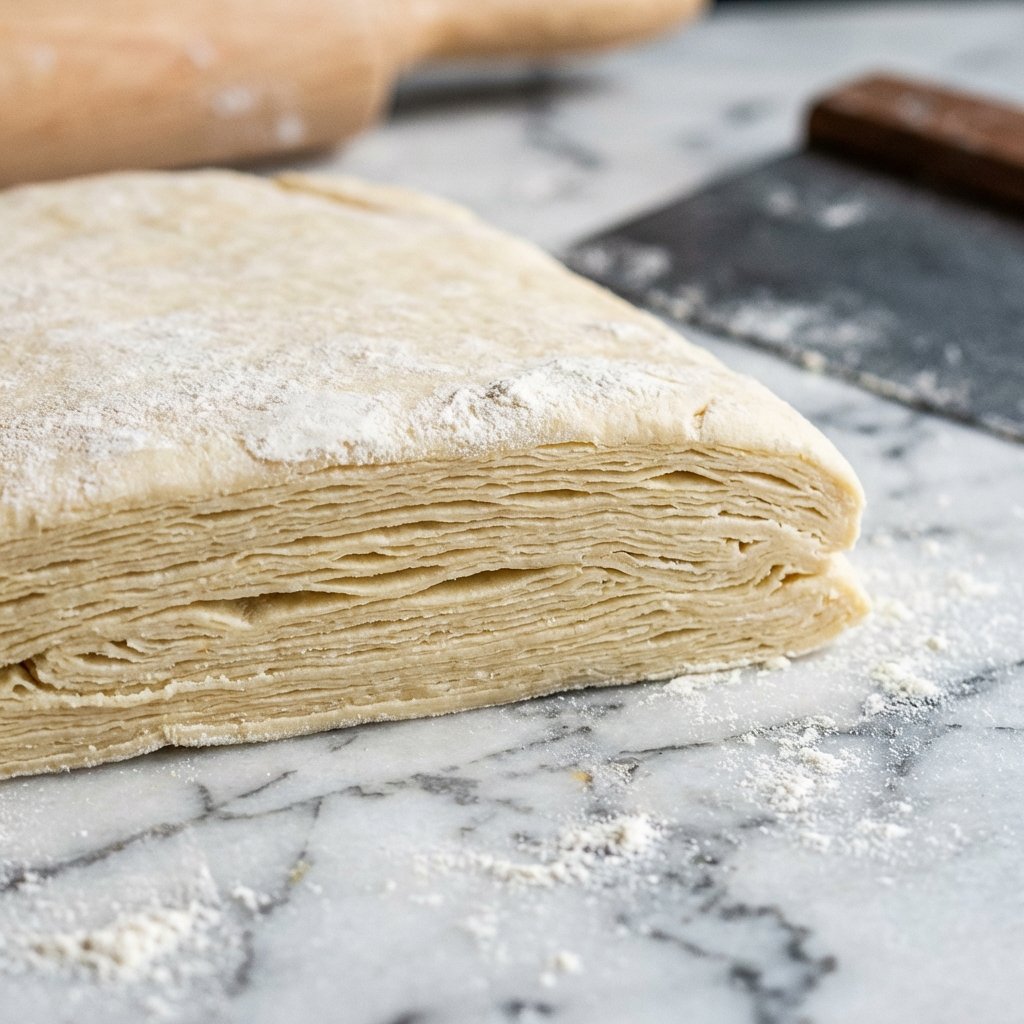
Why Most Pastry Fails (And How to Fix It)
After teaching hundreds of students, I’ve noticed the same mistakes again and again. The good news? Perfect flaky pastry isn’t magic - it’s science. Follow these principles and you’ll never have tough, chewy pastry again.
The Three Golden Rules
1. Keep Everything COLD
Why it matters: Cold butter creates steam pockets when it hits the hot oven. These pockets = flaky layers.
How to do it:
- Use butter straight from the fridge (or freeze for 10 minutes)
- Cube butter into small pieces (1cm) before starting
- Use ice-cold water (add actual ice cubes to your water)
- Chill your bowl and tools in the freezer for 15 minutes
- Work in an air-conditioned kitchen if possible
- If your hands are warm, run them under cold water first
Pro tip: In Singapore’s hot climate, I often put my flour in the freezer for 30 minutes before starting. Game-changer!
2. Don’t Overwork the Dough
Why it matters: Overworking develops gluten, which makes pastry tough and elastic (like bread) instead of tender and crumbly.
How to do it:
- Mix until JUST combined - the dough should look shaggy
- Stop when you can squeeze a handful and it holds together
- It’s okay to see butter pieces - they’ll create flaky layers!
- Use a light touch - don’t knead or press hard
- If using a food processor, pulse in short bursts (10-15 times max)
The test: Can you still see small butter pieces? Good! They should be about the size of peas.
3. Rest the Dough
Why it matters: Resting allows gluten to relax (making pastry easier to roll) and butter to re-solidify (keeping those flaky layers).
How to do it:
- Wrap dough tightly in plastic wrap
- Flatten into a disc (1-2 inches thick) before wrapping
- Refrigerate for at least 30 minutes (I prefer 1 hour)
- Can rest overnight - just let it sit at room temp 10 mins before rolling
- Freezes beautifully for up to 3 months
Pro tip: Make pastry the night before and let it rest overnight. The texture is noticeably better!
The Perfect Pastry Method (Step-by-Step)
Ingredients Ratio (Remember This!)
- 3 parts flour : 2 parts butter : 1 part water
- Example: 300g flour + 200g butter + 100ml water
Step 1: Prepare Your Ingredients
✓ 300g plain flour (chilled)
✓ 200g unsalted butter (cold, cubed)
✓ 6-8 tbsp ice-cold water
✓ Pinch of salt
Step 2: Rub in the Butter
- Mix flour and salt in a large bowl
- Add cold butter cubes
- Using fingertips, rub butter into flour
- Lift mixture up high and let it fall - this adds air
- Stop when mixture resembles breadcrumbs with pea-sized butter pieces
- Work QUICKLY - you don’t want the butter to melt!
Andy’s trick: Some bakers use a food processor, but I prefer the control of doing it by hand. You can feel when it’s just right.
Step 3: Add Water Gradually
- Drizzle 6 tbsp ice water over the mixture
- Use a butter knife to mix (not your hands - too warm!)
- Bring dough together with the knife
- Add more water 1 tsp at a time if needed
- Stop when dough JUST comes together
Critical point: Too much water = tough pastry. Too little = crumbly pastry that cracks. The dough should be slightly sticky but hold together when squeezed.
Step 4: Shape and Rest
- Tip dough onto a clean surface (no flour needed yet)
- Gently gather into a ball - don’t knead!
- Flatten into a 2cm thick disc
- Wrap tightly in plastic wrap
- Refrigerate for 30-60 minutes minimum
Step 5: Roll Out Properly
- Lightly flour your surface and rolling pin
- Let dough sit at room temp for 5-10 minutes (makes rolling easier)
- Roll from center outward, rotating dough 90° after each roll
- Aim for 3-4mm thickness
- If dough cracks, it’s too cold - wait 5 more minutes
- If butter starts melting, chill for 10 minutes
Troubleshooting Common Problems
Problem: Pastry is tough and chewy
Causes:
- Overworked the dough
- Too much water added
- Not enough butter
Solutions:
- Handle less next time
- Add water very gradually
- Check your ratios (3:2:1)
Problem: Pastry is crumbly and falls apart
Causes:
- Not enough water
- Too much butter
- Didn’t rest long enough
Solutions:
- Add water 1 tsp at a time
- Check your ratios
- Rest for full 30 minutes minimum
Problem: Pastry shrinks when baked
Causes:
- Gluten overdeveloped from overworking
- Didn’t rest long enough
- Stretched dough when lining tin
Solutions:
- Handle dough gently
- Always rest after rolling
- Lift pastry carefully, let it settle into tin naturally
Problem: Butter leaks out during baking
Causes:
- Butter wasn’t cold enough
- Oven temperature too low
- Pastry not chilled before baking
Solutions:
- Work with very cold butter
- Preheat oven to 200°C minimum
- Chill assembled pie for 15 minutes before baking
Advanced Tips for Bakery-Level Results
The Fraisage Technique
After making dough, smear it across your work surface with the heel of your hand (2-3 times). This creates extra-flaky layers. Don’t overdo it!
Vodka Trick
Replace half the water with vodka. Alcohol doesn’t develop gluten like water does, so you get flakier pastry. The alcohol evaporates during baking.
European-Style Butter
Use butter with 82-84% fat content (like Président or Lurpak). Higher fat = flakier pastry.
The Lamination Method
For extra-flaky pastry, fold dough like puff pastry:
- Roll into rectangle
- Fold into thirds (like a letter)
- Rotate 90°, roll again
- Repeat 2-3 times
- Rest 30 minutes between folds
Storage Tips
Refrigerator:
- Wrapped dough: 3 days
- Rolled pastry: 2 days (wrap well to prevent drying)
Freezer:
- Dough discs: 3 months (thaw overnight in fridge)
- Rolled pastry: 2 months
- Blind-baked shells: 2 months
Pro tip: Make double batches and freeze. Having pastry ready makes pie-making so much easier!
The Ultimate Flaky Pastry Checklist
Before you start, tick off this checklist:
☐ Butter is cold (from fridge or colder) ☐ Water has ice cubes in it ☐ Bowl and tools are chilled ☐ Kitchen is cool (AC on or work in morning) ☐ Ingredients measured and ready ☐ 30+ minutes available for resting time ☐ Light touch mindset (don’t overmix!) ☐ Patience ready (rushing = tough pastry)
Common Questions Answered
Q: Can I use margarine instead of butter? A: Technically yes, but butter tastes infinitely better. Use at least 80% fat margarine if you must.
Q: What’s the difference between shortcrust and rough puff pastry? A: Shortcrust is what we’ve covered - quick and versatile. Rough puff has more butter and folding, creating more layers (closer to puff pastry).
Q: Can I make pastry in advance? A: Absolutely! It’s actually better made ahead. Make it, rest it, then freeze or use the next day.
Q: Why does my pastry crack when rolling? A: Too cold! Let it sit at room temp for 5-10 minutes. It should be cold but pliable.
Q: Sweet or savory - same method? A: Same method! For sweet pastry (pâte sucrée), add 2-3 tbsp sugar and 1 egg yolk to the flour.
Key Takeaways
✓ Cold butter + cold water + light touch = flaky pastry ✓ Rest time is non-negotiable - it makes a huge difference ✓ Seeing butter pieces in the dough is GOOD ✓ Stop mixing earlier than you think - shaggy is okay ✓ Practice makes perfect - don’t get discouraged!
Master these techniques and you’ll have bakery-quality pastry every single time. The difference between good and great pastry is attention to these small details!